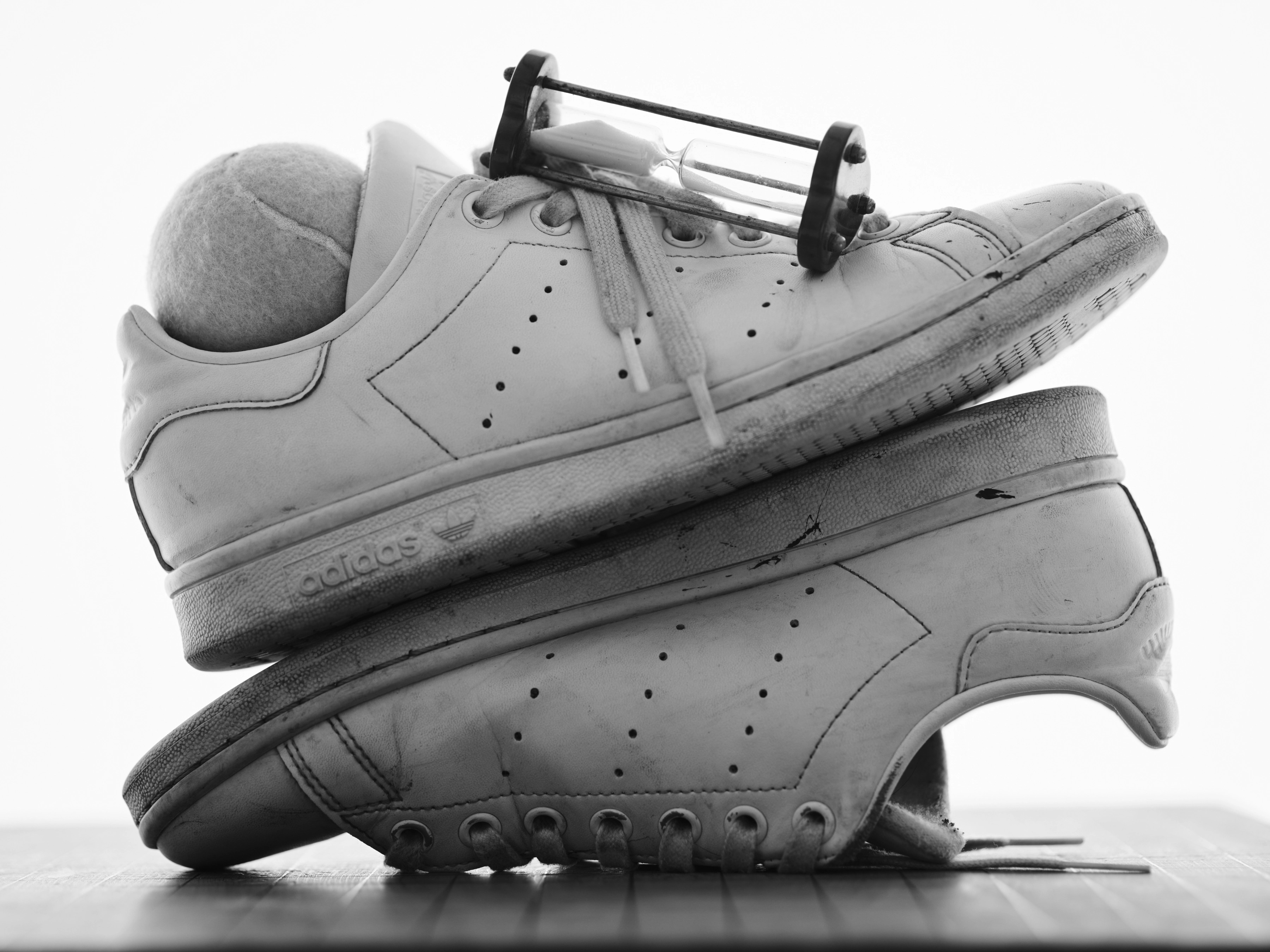
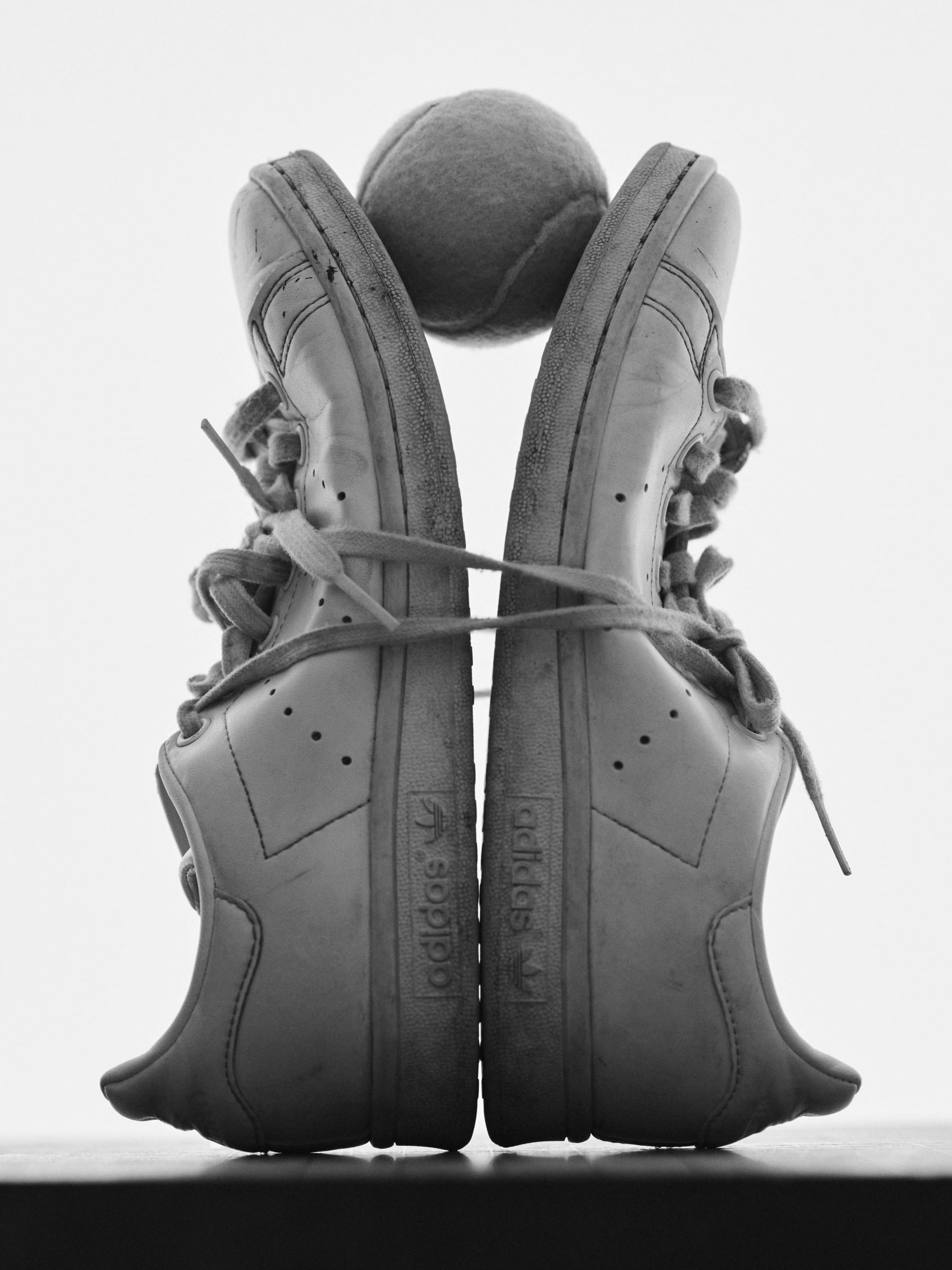
When I set out to examine the state of tennis footwear in 2026, I knew there was one man I needed to speak to. At 41 years old, Vicente Muñoz is a 5.0 player and the founder of Pro Shop, a buzzy tennis concept store in New York City. A lifelong student of the sport, he rattles off shoe names and updates faster than I can transcribe them. But the gist of our conversation boils down to this: “The state of tennis footwear is pretty dire,” he says. Brands, including ASICS, Nike, and Adidas, are embroiled in a battle to out-tech each other, leaving athletes—pro and amateur alike—frustrated and footsore.
When asked to elaborate, Muñoz points to pros like top-100 player Matteo Arnaldi, who was forced to publicly crowdsource his search for ASICS Solution Speed FF 2s for the Australian Open. Newer updates like the FF 3 and FF 4 don’t work for him.
“The main problem is there are too many changes, too much over-innovation,” Muñoz says. “Brands have a high desire to put out new products, but it’s often very on-the-fly and on too accelerated a timeline.” The result? Players left scrambling, chasing outdated styles across the internet and complaining on tennis forums.
Even the world’s best are not immune to the vagaries of overbaked product development.
Even the world’s best are not immune to the vagaries of overbaked product development. In 2024, tired of foot pain in his Nike Vapors, Taylor Fritz switched to ASICS shoes and started playing in their GEL-Resolution 9s. But the Xs—released in 2025—are a different story. Where 8 and 9 were “phenomenal shoes,” says Muñoz, many consider the X to be the worst iteration in an otherwise highly successful franchise. Fritz—spotted in 9s painted to look like Xs—appears to agree.
“Is there any chance ASICS would realize their mistake and rerelease the GR9?” writes one commenter on the Tennis Warehouse forum. “I’ve tried about every shoe and am still just trying to wear my last pair of 9s as long as possible.”
Dismal reviews for the X aside, ASICS, the Japanese brand whose “Sound Mind. Sound Body” message contrasts explicitly with Nike’s “Just Do It” gravitas, has thus far been a quietly consistent stand-out on court, powered by a winning tennis strategy that their biggest competitors lack.
“ASICS is really excelling in footwear,” says Kaya Zacharska, a tennis player and content creator known for her cheeky “What Your Tennis Shoe Says About You” videos. “Their shoes are a very popular choice for players of all levels and are mentioned often in my comments. Plus, many pros wear their shoes even if their kit is sponsored by another brand. This is quite telling.”
When British tennis star and former world #4 Jack Draper (now #112) announced his departure from Nike to California activewear brand Vuori at the 2025 U.S. Open, he paired his new kit with ASICS’s Solution Speed FF 3. American Emma Navarro (#28) did the same earlier this year, switching from Fila to FP Movement and ASICS’s Solution Speed FF 4. Their moves, while certainly motivated by finances as much as performance, underscore that ASICS’s tennis-specific strategy—called The T Project—is working.
While tennis is unlikely to eclipse running in the ASICS pantheon, it is the brand’s second priority sport and a key driver of their record-breaking growth...
The T Project was launched in 2024 by ASICS president, COO, and lifelong tennis fan, Mitsuyuki Tominaga. It brings together player strategy, product development, and grassroots engagement with the goal of enshrining ASICS as “the most influential brand for tennis players.” And while tennis is unlikely to eclipse running in the ASICS pantheon, it is the brand’s second priority sport and a key driver of their record-breaking growth, with global net sales reaching 270.2 billion yen in Q1 2026, a 29.7% increase year over year.

In contrast to ASICS’s laser-sharp tennis strategy, Nike finds itself on its back foot. A symptom of ill-fated ex-CEO John Donahoe’s efforts to reconfigure sport-specific teams, reduce product R&D, and divest from wholesale in favor of DTC sales, Nike’s tennis offering lacks an edge. Consider this: despite sponsoring the men’s #1 and #2 and women’s #1, neither Carlos Alcaraz, Jannik Sinner, nor Aryna Sabalenka play in a signature shoe like Coco Gauff and her New Balance CG1. Of course, that may soon be changing, as a Nike-designed logo for Alcaraz leaked in January.
In 2026, the brand is working to recalibrate. Donahoe’s replacement, Elliott Hill, has turned back the clock, restructuring teams around sports once more. With a renewed focus on the court, they’re hiring a senior creative director for tennis to “build and land the design innovation roadmap” and shedding pros not named Sinner, Alcaraz, Osaka, or Sabalenka to marshal energy around the most impactful athletes. Ultimately, “People want to wear what the top players are wearing on TV,” says Muñoz. Sales prove his point: the Nike Vapor line was a 2025 best-seller for both men and women on Tennis Warehouse.
Still, reviews of Nike’s current offerings remain mixed. Feedback from a wear test session last year was so disparaging that the brand scrapped the shoe release. Social commentary tells a similar tale. “From what I have seen being said online and in my comments section, despite Nike being a popular choice for a lot of people, many complain that their shoes fall apart relatively quickly and need to be replaced frequently,” says Zacharska.
Nike’s tennis woes are symptomatic of bigger pains. In March, the brand reported net sales of $11.3 billion in Q3 2026, a 3% decrease from last year. In a sanguine public statement, Hill said, “The work is not finished, but the direction is clear.” But according to Bloomberg, the strain is beginning to show. “I’m so tired,” he told staff after an earnings call earlier in the year. “And I know you are too, of talking about fixing this business.”

If ASICS has their tennis strategy dialed, and Nike’s lost in the Oregon wilderness, Adidas lands somewhere in the middle.
If ASICS has their tennis strategy dialed, and Nike’s lost in the Oregon wilderness, Adidas lands somewhere in the middle. Sales and reviews are solid for shoes like the stalwart Barricade—now in its 26th year—and pros love the speedy Ubersonic launched in 2015.
Still, insiders at the brand say that the sport is a low priority for the business, without its own dedicated team in most markets and allocated limited budgets. This is reflected in their Q2 2026 financials, where tennis is fleetingly mentioned alongside other "specialists sports" like swim and cycling. Football, running, training, and basketball drive the brand's global growth and strategic priorities.
With two of the three biggest footwear brands lacking a compelling vision for the sport, there’s space on the court for newer and smaller players, who are increasingly adept at luring talent away from the incumbents. Consider world #20, American Frances Tiafoe, who left Nike in 2025 to wear Lululemon kit and K-Swiss shoes. His reasoning? “There are a couple decent guys, a couple decent athletes, that are over at Nike,” he said in a press conference. “Why not be the guy instead of one of them?”
Interestingly, the opportunity facing tennis brands outside the big three echoes some of the trends shaping running...
With tighter rosters, brands like On, Lacoste, and Wilson choose to invest in richer athlete storytelling, which appeals to players looking to maximize their visibility. But these moves are far from vanity projects. The shoes have to rival or exceed the offerings from the incumbents for players to even contemplate making the jump. Lacoste’s AG-LT23 Ultra, released in 2023 and worn by #7 Daniil Medvedev, is a standout. Wilson’s strategy involves embedding players, like Ukraine’s Marta Kostyuk (#11) whose insights guided the launch of their women’s specific Intrigue, into the product development process. At the consumer level, Diadora, K-Swiss, and Lacoste rose to the top in my conversations with retailers as challengers making inroads through renewed product excellence.
Interestingly, the opportunity facing tennis brands outside the big three echoes some of the trends shaping running, the priority sport for brands like ASICS, Nike, and Adidas. There, European upstarts like Hoka and On and newer arrivals like Tracksmith, Satisfy, and Bandit have nibbled into the legacy brand’s share of the market. Powered by a combination of product innovations and sub-cultural appeal, these brands have transformed running from nerdy and niche to fashion-forward and aspirational.
The “dire” state of tennis footwear signals a major opportunity for challenger brands. If they can avoid the trap of over-innovation, deliver durable shoes at reasonable prices, and connect with the community, well, then, watch out for an upset.